
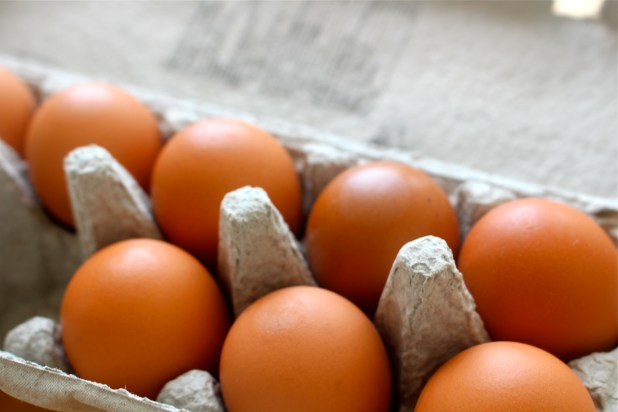
As summer begins, our reflections on Canadian Literary Fare bring to mind the “gracious outdoor living” of the barbecue, the unexpected pleasures of garden veggies (especially carrots), and the labour-intensive ingenuity of dandelion coffee.
But what about breakfast?
This meal belongs to no single season, yet it is our chosen source of inspiration for the next few months. And it seems fitting. Summertime brings extended daylight hours, which means breakfast becomes all the more important for fuelling one’s day. Or does it?

The Current’s Anna Maria Tremonti recently questioned this ever-popular breakfast myth. Clearly, the stories we tell ourselves about our meals influence our daily regimens. The Canadian literary world comes with its own recommendations. In The Canlit Foodbook, Margaret Atwood observes that “breakfast seems to do something for poets that lunch does not do” and quickly adds “It may be the eggs” (3). B.C. poet and recent cookbook author Susan Musgrave likely agrees.
Musgrave’s poem “Poet at the Breakfast Table”, which originally appeared in Grave-Dirt and Selected Strawberries (1973), opens with the speaker divulging a secret for creativity: “I eat those / soft and / yellow parts” (102). This breakfast inspiration implies freshness, sweetness, and vitality — those symbolic eggs of new beginnings where nothing is “troubled, / hardened or / dry” (102).
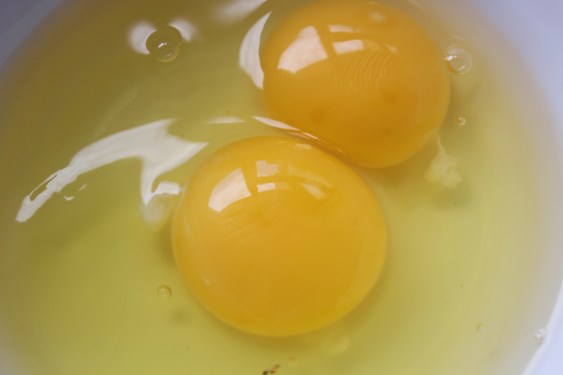
But Musgrave’s morning meal has another side. At the poem’s midpoint, a different egg appears (in a tree) that feeds on earth and worms. Its yellow hue, evocative of disease. Here, life’s experiences of the pale and the dark (not just the sweet) are served at the poet’s breakfast table.
Symbolism aside, eggs can be tricky, especially when purchased at a grocery store. In her 2015 cookbook, A Taste of Haida Gwaii: Food Gathering and Feasting at the Edge of the World, Musgrave offers a tip for testing the freshness of uncooked eggs. Drop your egg into a glass of cold water. It should sink to the bottom and rest on its side.

Beware the floating egg, as Musgrave advises her culinary readers to “donate it to [a] local museum as a ‘heritage egg'” (37).
On Haida Gwaii at Copper Beech House (Musgrave’s B&B guest house), Musgrave serves an “Off-the-Continental Breakfast”, which often includes scrambled eggs — prepared soft and moist with cream (about 2 tablespoons of whipping cream or half and half per egg).
Musgrave recommends spooning the eggs—“in all their dreamy-yellow slipperiness”— onto a “warm and expectant piece of toast” (35).

I’ve added some “selected” local strawberries on the side, a tribute to Musgrave’s poetic mythology of the strawberry. At Copper Beech House, Musgrave tells us that breakfast can be “a leisurely all-morning-long event” (A Taste 24), which certainly sounds inviting during this sweet summer season.

Atwood, Margaret. The Canlit Foodbook. Don Mills: Totem Books, 1987. Print.
Musgrave, Susan. “Poet at the Breakfast Table.” What a Small Day Cannot Hold: Collected Poems 1970-1985. Vancouver: Beach Holme Publishing, 2000. 102-103. Print.
– – – . A Taste of Haida Gwaii: Food Gathering and Feasting at the Edge of the World. Vancouver: Whitecap Books, 2015. Print.
Text and Photo Credits: Shelley Boyd

 Debora and Michael Shaun-Hastings serve as the dinner’s hosts, setting a place at the table for their dead son, Joel. Tamara and Bill Dermot arrive with their bullying son in search of forgiveness, but an alternate agenda of blame begins to surface, revealing the heteronormative beliefs that have informed the actions of all. Bill strikes his son in an effort to police his masculinity, and Debora and Michael express regret at having “put all [their] eggs in one basket” (their only son having turned out to be gay). Eating is predicated on sacrifice (something living must die that others may eat), and the form of consumption signifies parallel cultural sacrifice. In this case, the othering of alternative sexual expression allows conservative family values to dominate culturally. Shrimp and scallops are on the menu in spite of the bully’s seafood allergy— a premeditated, vengeful faux-pas. The shrimp stand in for a far more grievous offence— Joel’s perceived lack of masculinity, without which he could not but fail to take his place at the nuclear family’s table. As the families keep company with the memory of the late teen, the dinner descends into disorder: food is smeared on the wall, accusations are launched, and a performance of Joel’s horrific sacrifice replaces post-dinner entertainment. As the edifice of etiquette gradually crumbles, Canadian society’s foundation of normalized brutality is exposed.
 Canadian Literary Fare