Fresh Eggs and Polenta Chips

The CHC’s Canada 150 Blog Challenge for the month of February is: doing without. Last week, Shelley sought advice on the matter from the redoubtable sisters of the backwoods, Catherine Parr Traill and Susanna Moodie. This week, Licia Canton has contributed another story of emigration: from sunny Cavarzere, in the province of Venice to Montreal- North. This is a story about missing home (and eggs fresh from the chicken coop).

by Licia Canton

I have always felt the need to go back “home” – to retrieve the tastes and smells I left behind in my hometown of Cavarzere, in the province of Venice. I was only four years old when my family moved to a basement apartment in Montreal-North. I missed the sunny, rural setting we left behind. I cried a lot that first year.

I cried on my fifth birthday in February 1968. There’s a silent film of me in front of a big cake. My father is encouraging me to blow out the five candles but all I can do is cry. Maybe it was the room full of people from our hometown, none of whom were related to me. Maybe I cried because the cake did not look like the one I had had on my fourth birthday. Maybe I was just unhappy after being uprooted and replanted in a foreign land at an early age.

They say I was a talkative and adventurous child in Italy. But in Canada I missed my grandparents, aunts, uncles and cousins. I missed a whole town full of people who knew who I was and who escorted me back home whenever I ventured to the piazza on my Graziella, the little white and blue bicycle I still have 50 years later. That bicycle was the symbol of my freedom. I could go anywhere, and I was safe. In Montreal, I was cooped up in a tiny, cold apartment. My parents wouldn’t let me go out to play. Big cars went by fast, even on des Récollets Street where we lived. I couldn’t play in the backyard because it was reserved for the owner of the duplex who lived upstairs.
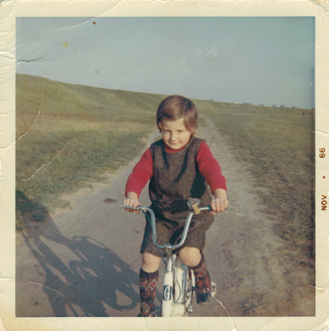
licia-on-bike-1966

I especially missed the foods that I was used to in Cavarzere, those my mother couldn’t replicate. The bananas purchased at Steinberg’s grocery store did not taste like the bananas in Italy. They were big and odourless. The oranges felt like plastic. They didn’t taste right either. Cherries were hard to come by. My mother purchased red and green candied cherries one time. I still recall my frustration at the sight of them. That’s not what I wanted. I did not say so because I was sure my mother had spent a pretty penny for them. She ended up making a cake with them.

Mostly, I missed my daily breakfast routine. I fed myself because my mother was busy with my baby sister, three years my junior. Every morning I went into the warm, smelly chicken coop. The rickety door alerted the chickens, and they all scattered about when I walked in. I looked into every nest before choosing my egg. It was always a little dirty but very warm in my hand. Tap, tap. I cracked it open and drank it on the spot. Yes, there were eggs at Steinberg’s and at the dépanneur at the corner of des Récollets and Prieur streets, just a short walk from our basement home. But they were cold and spotless. Not what I was used to. My mother appeased me by making sbattutino.

Back then, I also missed my grandmother’s polenta crusts: ƚe croste del paroƚo as we call them in Venetian dialect. Every day Nonna Gemma made a big pot (paroƚo) of polenta for her numerous family members. Once the huge polenta was laid out to be eaten, the residue dried up in the pot. She let me scrape the crusts. I liked the polenta chips more than the polenta itself. The chips were a treat for me.

My mother made polenta in Montreal, but she did not have my grandmother’s copper pot. There were no polenta chips to scrape off. I was disappointed whenever I saw the pot soaking in sink.

In the early years, every time I came back to Montreal after having vacationed in my hometown I had to get used to the fruit again. For a long time, that bowl of fruit at the centre of my mother’s table provoked a sense of loss in me.

That is no longer the case today. In recent years, I have seen similar bowls of fruit in the homes I’ve visited in Italy. Italians, too, buy fruit at the supermarket. They also buy ready-made polenta.

Even today, when I am sad or disappointed I crave my mother’s sbattutino. Of course, it is not the same colour as the sbattutino she made for me with eggs from the chicken coop. But I cannot complain about my parents’ decision to emigrate. I know now that it was the right decision: it gave us all a new beginning and many years of happiness. I have gotten over my sadness. And I am also grateful that my early childhood memories are so full.

Text and Photo by Licia Canton
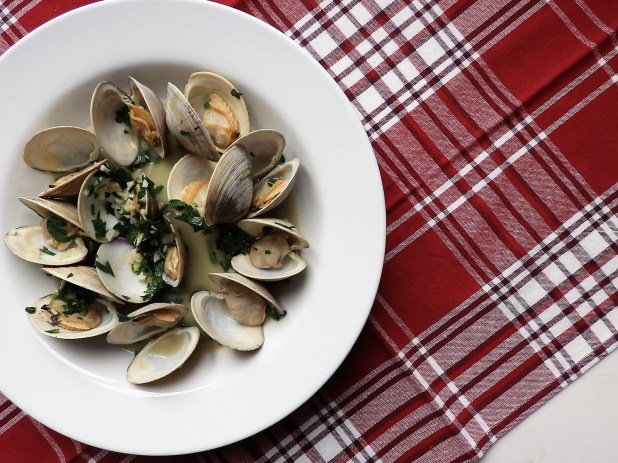
Monkey Beach Clams

Eden Robinson’s Monkey Beach is set at the head of the Douglas Channel, in Kitamaat Village, “with its seven hundred Haisla people tucked in between the mountains and the ocean” (5).

“At the end of the village is our house,” explains narrator Lisamarie Hill. “Our kitchen looks out onto the water” (5).

The mountains and the ocean not only surround but also supply the Hill family’s kitchen with such riches as oolichan, made into grease; crabs, boiled; cockles and clams, put up into jars. Not to mention q°alh’m shoots with their taste of fresh green peas, ci’x°a or wild crabapples, Pipxs’m and sya’k°nalh blueberries, and soapberries or uh’s whipped into a foam.

Lisa is an indifferent cook in her home economics classes but a fast learner when it comes to cleaning and smoking sockeye salmon in the yard with her mother and grandmother.

It is a challenge for the literary cook to replicate any of the dishes in this novel. In some cases, the ingredients are endangered. Commercial fisheries for Oolichan, for instance, are closed. Or, they are particular to the west coast. Finally, they require a wealth of acquired knowledge and technique to forage for and prepare them.

Lisa had her grandmother, Ma-ma-moo. I had Mémère. So, in the interest of drawing from grandmotherly wisdom, I have made clams for you today. And I have steamed them in wine and served them with French fries because that was what my grandmother did.

clams

garlic

garlic, lemon, butter, parsley, wine

Susan Musgrave’s A Taste of Haida Gwaii includes very helpful instructions on how to purge clams – with salt water if you please. Now I can successfully avoid the debacle that is sandy clam chowder.

sea salt for purging

purging sand

And this, some few minutes after cooking . . .

with fries

Robinson, Eden. Monkey Beach. Toronto: Vintage Canada, 2001.

Oysters: the raw and the cooked

We’ll be highlighting a range of dishes over the next few months as we prepare to celebrate Canada’s 150th year. Set sail with us as we plumb the depths of what is Canadian in Canadian Literary Fare.


Gwendolyn MacEwen’s “Sea Things” from, The Armies of the Moon (1972) lends itself well to the theme of fish and seafood we’ve been exploring.

She’s interested in “shellfish and sponges and those/ half-plant half-animal things that go/ flump flump on the sea floor”.

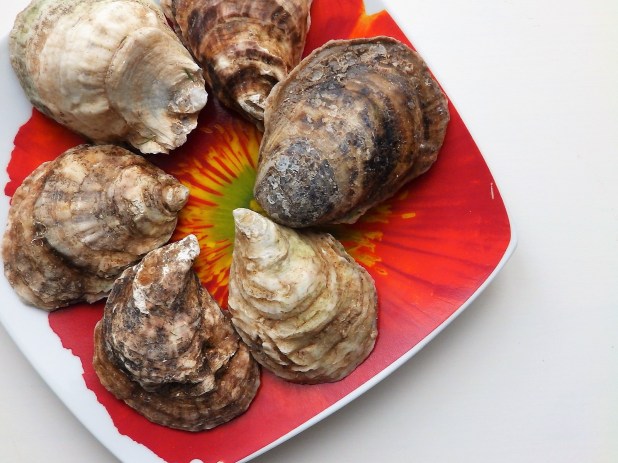
oysters

She worries about the oysters, “about how they’re finding their food / or making love, or for that matter / if they have anything to make love with.”

I am less worried about their alimentary and sexual habits. I leave them to figure it out for themselves, self-sufficient creatures that they are.

These days I am more preoccupied with how to choose them, how to open them, how best to prepare and eat them.

“Raw with lemon juice” you will exclaim.

lemon

Some of you are of the mignonette persuasion: a little shallot, a little red wine vinegar perhaps?

shallot

And some of you cook them, or deep fry them.

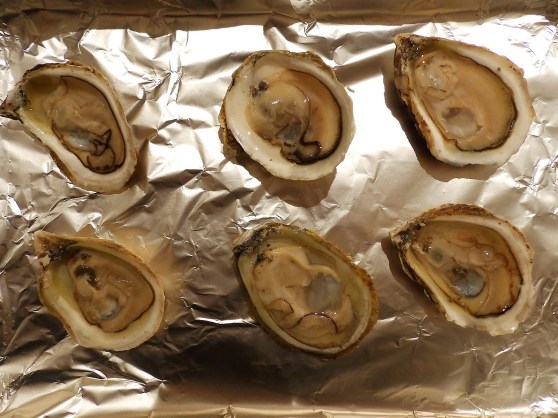
In the spirit of diplomacy, I shall not take sides. Out of curiosity, however, I wondered what it would be like to cover them with breadcrumbs (with garlic and parsley, a little Parmesan, and a hint of sriracha) and broil them.

to be broiled

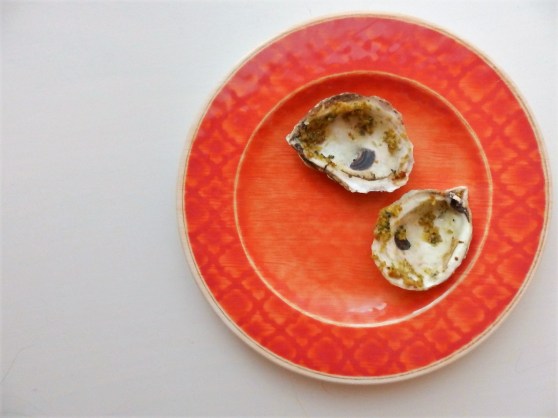
I am happy to report that the oysters cooperated beautifully with nary a word of complaint. All of the more squeamish members of my household were duly satisfied.

broiled

Here is an approximate recipe:

For 6 oysters on the half shell

  • 4 tablespoons panko breadcrumbs
  • 1 tablespoon melted butter
  • 2 cloves minced garlic
  • 1 tablespoon of fresh minced parsley
  • 1 tablespoon grated fresh parmesan
  • ¼ teaspoon sriracha sauce
  • Salt and pepper

Combine ingredients. Spoon over oysters and broil for 5 to 6 minutes.

eaten

MacEwen, Gwendolyn. The Armies of the Moon. Toronto: Macmillan of Canada, 1972.

Photos and Text by Alexia Moyer

Cod Liver Oil: for breakfast

And we’re back with a guest post by Licia Canton on – of all fishy dishes – cod liver oil. Stay tuned for next week’s foray into oyster cookery.


By the age of six I had been in Canada for two years. I was obliged to drink a little homemade wine at dinner because it was good for me. It would make me stronger, my Venetian parents said. The same with garlic.

I didn’t like garlic and I wasn’t crazy about wine as a child, either. But I disliked cod liver oil the most.

Every morning my mother put a spoonful of the slimy liquid into my mouth, followed by a teaspoon of sugar. That horrible taste of fish lasted all morning. It didn’t matter how much more sugar I sneaked before going up the hill on Bruxelles Street to St. Alice School, I was still burping fish at recess time.

I was a good, obedient daughter and therefore could not refuse the cod liver oil. My mother was the one who administered the medicinal fluid right after breakfast, and she was the gentlest person I had ever known. I was convinced that it wasn’t her idea. My father was the one who went on and on about how good cod liver oil was for kids.

Did he take it every morning before going to work? I didn’t know. I never asked. He was already at work by the time we had breakfast.

He didn’t go to church every Sunday morning either. But his kids wouldn’t get any Sunday lunch if he came home from work (Yes, he worked Sunday mornings, too.) and we couldn’t say yes to his “Did you go to church?” The times he did come to church (Christmas, Easter or a communion) he stood at the back. He never sat with us. I asked once why he did not sit with us. It would have been good for the regular churchgoers to know that I had a father. Standing was his way of doing penance, he said, for all the masses he had missed.

Eventually, I stopped taking cod liver oil, just as I stopped wearing the canottiera (the sleeveless undershirt I was forced to wear even after I began wearing a bra). My sister and I had to wear the canottiera (supplies of which we bought in Italy in the summer) all year round, even on the hottest summer days, because it was good for us!

I’d totally forgotten about cod liver oil by the time I had ditched the undershirt, but it came up again decades later, after I became a mother.

“Are you giving the children cod liver oil?” My father had pointed out that my kids looked a little pale. “You should give it to them every morning before they go to school. That’s what made you strong, remember?”

I didn’t like the thought of that at all. I remembered the fish taste in my mouth.

I was in the pharmacy one winter and stumbled upon the shelf with cod liver oil capsules. Either out of curiosity or sheer desire to stop my father’s “Are you giving them cod liver oil?”, I bought the capsules and took them home. By then I had read that cod liver oil enhances immunity. It also contains high levels of Omega 3 fatty acids and is a good source of Vitamin A and D.

I gave the capsules to the kids on a Saturday morning, not a school morning. Of course not.

Surprise! They didn’t like cod liver oil, either. I tasted a capsule to see if it was better than what I used to get… Yuck. It was the same oil even in capsules.

The next time my father asked if I had given my children cod liver oil, I quickly said yes.