Caribou

“Ça fesse, c’t’affaire-là!” exclaims Tititte Desrosiers in Michel Tremblay’s La Traversée des Sentiments, as she downs a shot of caribou.

In this final installment of “what are Michel Tremblay’s characters drinking?” we’re moving on from tea and milk to something more potent.

Caribou, Tremblay explains, is a drink with a reputation. It goes straight to your head, then makes it spin. Next, you can expect to go hot all over. These effects are quick to present themselves and are long lasting.

In the novel, Simon’s version is home brewed and is, I suspect – given its effect on those who imbibe – of considerably higher alcoholic content than the 22.9% version offered by the SAQ. The agreed upon ingredients are wine (often fortified), spirits and something to sweeten it

But before the digestif comes the meal: a roast of both pork and beef, darted with whole garlic cloves, roast potatoes, canned peas and carrot purée. For dessert, a raspberry tart.

Unlike Rose, I did not gather the raspberries from those bushes behind the outhouses. I will leave raspberry gathering to your discretion. Here is my tart, with some added apple for good measure.

OLYMPUS DIGITAL CAMERA

Apple Raspberry Tart

Tremblay, Michel. La Traversée Des Sentiments: Roman. Montréal: Leméac, 2009. Print.

Photos and Text by Alexia Moyer

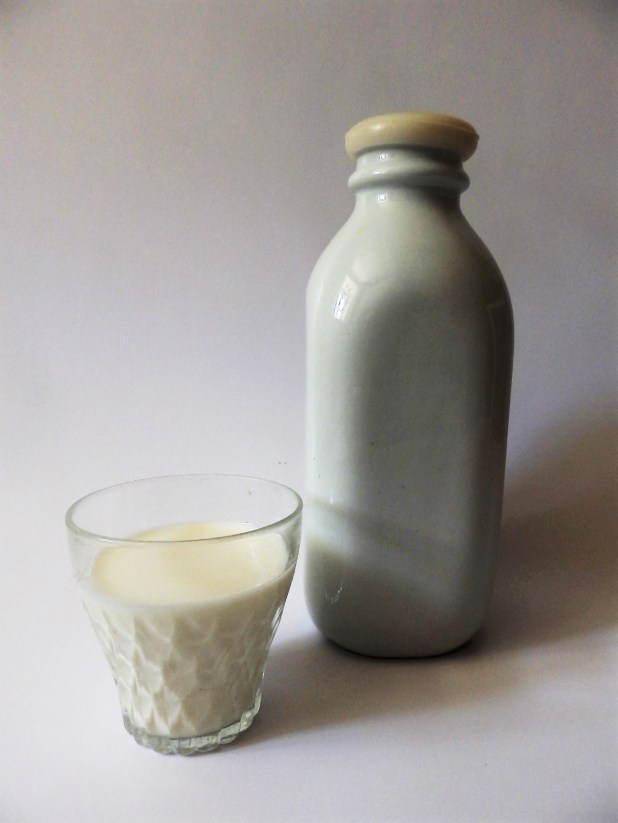
Un petit verre de lait

In Tremblay’s œuvre, milk is a habit, the occasional source of comfort and an accompaniment to sweet things: « un petit morceau de gâteau pour finir le petit verre de lait . . . Un petit verre de lait pour finir le petit morceau de gâteau » (La grosse femme d’à côté est enceinte).

In Tremblay’s La Duchesse et le roturier, Marcel drinks his milk with molasses cookies, his grandmother’s recipe. Such an ordinary snack accompanied by such an extraordinary conversation between this boy and the ghost/muse/fate, Florence, as to whether she can bring his departed grandmother Victoire back to him. The milk, the cookie, Florence. As far as Marcel is concerned, each is as real the other.

The recipe I have used comes from the 1926 or second edition of the Manuel de cuisine raisonnée. Originally produced in 1919 for the students of the École normale classico-ménagère de Saint-Pascal, this cookbook has known widespread use in both schools and homes in Québec and remained in print until the 1980s. There is even a 2003 edition.*

This pairing of cookbook and novel is not, I hasten to add, my own. It is Anne Fortin who painstakingly identified all references to food and drink in Tremblay’s novel cycles, La Diaspora des Desrosiers and Les Chroniques du Plateau. Fortin whittled the 400 references down to a more manageable 150 and then settled down to the work of naming and contextualizing the dishes, providing recipes from a variety of sources, not to mention visuals in the form of period photographs and advertisements. Ainsi Cuisinaient les Belles Soeurs dans l’oeuvre de Michel Tremblay: Une traversée de notre patrimoine culinaire 1913-1963 is the resulting literary cookbook / culinary history of Québec.

OLYMPUS DIGITAL CAMERA

milk and cookies

Molasses Cookies

Translated and adapted from Manuel de cuisine raisonnée, 1926.

Ingredients:

1 cup molasses

2 teaspoons baking powder

1 cup brown sugar

1 egg

½ cup butter or lard

2 teaspoons ground ginger

3 cups flour

1 cup milk


Instructions:

Preheat oven to 350 ⁰F

In a bowl, cream the butter with the brown sugar. Add molasses. Add the egg and stir to combine.

In a second bowl combine the flour, baking powder and ground ginger.

Stir the dry ingredients into the wet, alternating with the milk until combined.

Spoon batter onto parchment-lined cookie sheets and bake for 10 minutes.

Cool on a wire rack.

Eat.


*see Elizabeth Driver’s seminal Culinary Landmarks for a more comprehensive summary.

Driver, Elizabeth. Culinary Landmarks: A Bibliography of Canadian Cookbooks, 1825-1949. Toronto: University of Toronto Press, 2008. Print.

Fortin, Anne. Ainsi Cuisinaient Les Belles-Sœurs Dans L’œuvre De Michel Tremblay: Une Traversée De Notre Patrimoine Culinaire, 1913-1963. , 2014. Print.

Tremblay, Michel. La Grosse Femme D’à Côté Est Enceinte. Montréal: Leméac, 1978. Print.

—. La Duchesse Et Le Roturier. Ottawa: Leméac, 1982. Print.


Photos and text by Alexia Moyer

Food in Canadian Film, Part 5: Les ordres

by Jonathan Motha-Pollock

The October Crisis followed the kidnapping of two government officials in Montreal by the Front de libération du Québec (FLQ). Prime Minister Pierre Trudeau instituted the War Measures Act, bringing the Canadian military into the city and allowing the Montreal Police Department to detain 497 people without due process (Clément 167). The arrests largely targeted nationalists and those of the political left — those whose beliefs might align with the FLQ. Les ordres is Michel Brault’s fact-based retelling of this event. It is a docu-fiction that tells the story of five individuals among the many civilians who were wrongfully imprisoned during the October Crisis. The film chronicles the experiences of these five characters from the time they are arrested, to the injustices they suffer in prison, to the lasting effects after their release.

The following two scenes yoke food together with freedom. The one (food) stands in for the other (freedom or lack thereof).

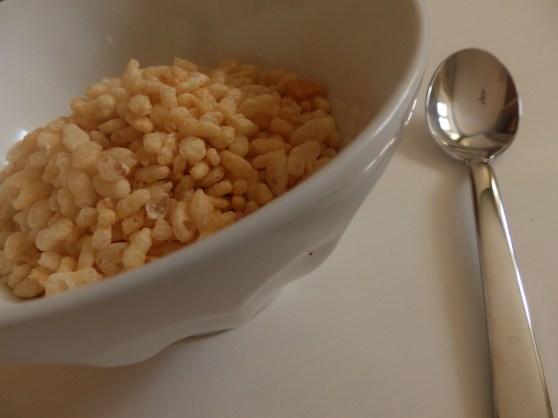
In the first, a handcuffed Richard instructs his eldest son Sébastien to feed his infant brother cereal. Sébastien responds to his father’s orders, saying that his little brother will not want to eat cereal. His infant brother’s appetite is a matter of choice, desire, freedom, none of which applies to Richard, who is being taken to prison. Beyond this, however, Richard is also positioned as a prisoner in the way that he is constrained by the limits of the lens. The camera frames Richard with a medium shot — cutting off his legs as well as the top of his head — while he is being handcuffed. Additionally, the blocking of characters in the scene lends itself to a sense of enclosure: Richard is positioned between the two officers who arrest him; there is literally no way out. It is telling, then, that the cereal eater or abstainer in question is not once “captured” on film during the conversation about cereal. He is sitting in a nearby room, but he maintains his freedom, outside the frame.

OLYMPUS DIGITAL CAMERA

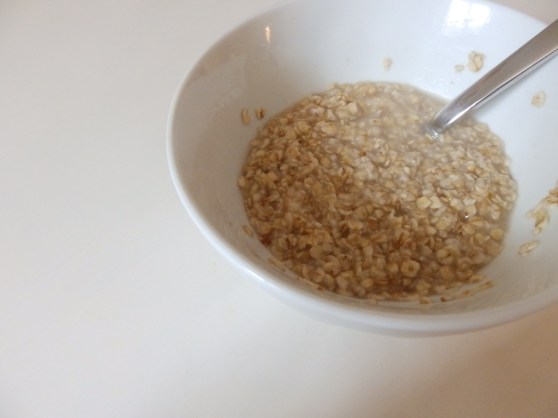
The second scene depicts Clermont’s struggle to stay nourished while locked up in his prison cell. The tight shots of Clermont’s cell portray an image of a man with no room to move. Additionally, his cell bars stand in front of the camera, dividing him from the viewer. Clermont is given food that is inedible. Initially he tries to eat the porridge but vomits. He struggles to exercise agency by refusing to eat until actual food is provided. André Loiselle describes the prisoners’ refusal to eat as a matter of “try[ing] to maintain a sense of dignity in the face of horrendous humiliation” (108). Later, another inmate explains that the prison guards delay access to edible food so that when it is given, the guards appear as benefactors to the prisoners.

 
OLYMPUS DIGITAL CAMERA

Reading food as a symbol of freedom in this film exposes how the actions of law enforcement can violate people’s civil liberties, and it reminds the viewer to be skeptical of extreme government action.


Works Cited

Clément, Dominique. “The October Crisis of 1970: Human rights abuses under the war measures act.” Journal of Canadian Studies/Revue d’études canadiennes 42.2 (2008): 160-186.

Loiselle, André. Cinema as History: Michel Brault and Modern Quebec. Toronto International Film Festival, 2007.

Les ordres. Montreal: Michel Brault, 1974. DVD.


Photos by Alexia Moyer


Food in Canadian Film, Part 4: Take This Waltz

by Ilinca Enache

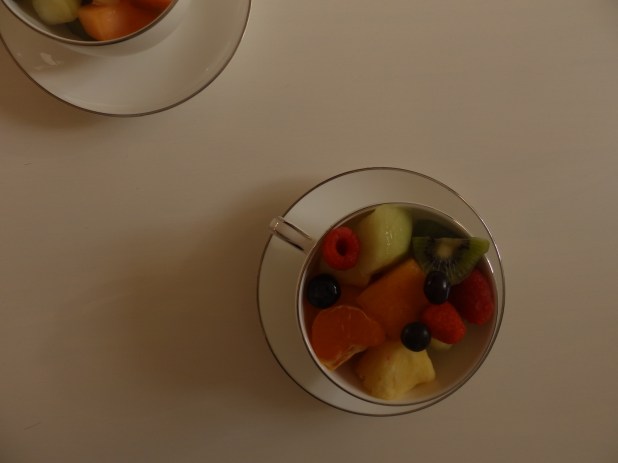
In Sarah Polley’s film Take This Waltz, 28 year-old Margot struggles to make sense of her feelings for her husband Lou in light of her recent flirtatious relationship with her neighbor, Daniel. Food plays a crucial role in this film: the type of dish Margot eats with each of the two men reflects the point they have reached in their respective relationships. A dull dessert, in other words, signals that the end is nigh. Margot always ends up in the same place: eating fruit salad, making blueberry muffins and living in what she sees as a dreary relationship.

Continue reading