Served with Geraniums

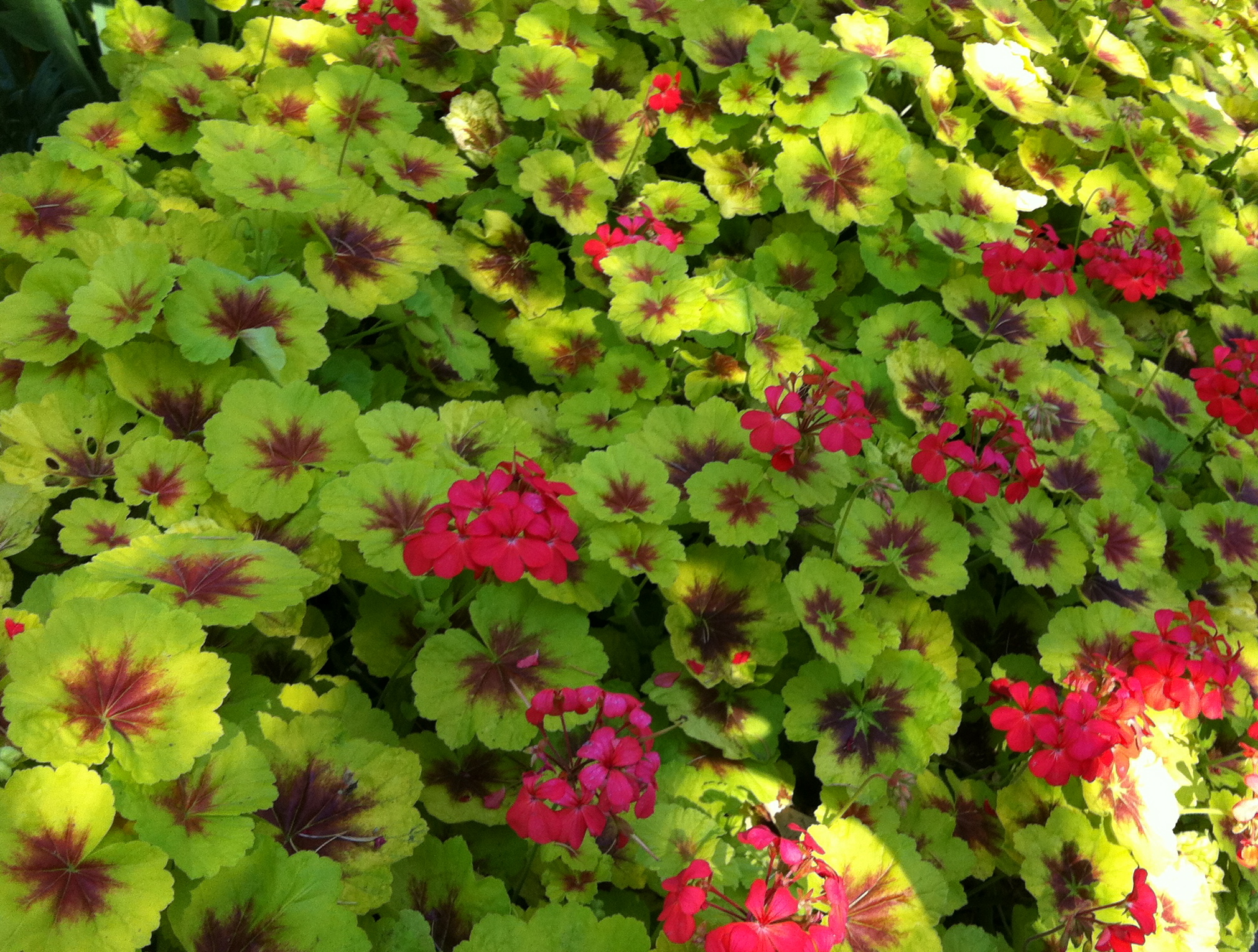
A few years ago, I developed a small (literary) obsession with geraniums. These flowers, which are actually pelargoniums, are everywhere in Canadian literature. From the nineteenth century to the present, this domesticated exotic has proven itself extremely versatile in the imaginations of our writers.
During my initial research, I located a number of references to the geranium’s culinary uses, but at the time, I had to set these aside. Now, in the spirit of summertime fare, I can’t resist exploring my geranium inventory a little further.

Enthusiasts of author L.M. Montgomery will recall that Marilla Cuthbert has an apple-scented geranium growing in her kitchen window. During her first morning at Green Gables, Anne names this plant “Bonny.” It’s a sentimental gesture, a sign of this orphan’s desire for a loving home (Boyd 83-84). In their documentation of this scene, the editors of The Annotated Anne of Green Gables state that as a kitchen herb, the geranium’s leaves “were used sometimes in flavourings” (81). Although we never see Marilla cooking with geraniums, a quick internet search produces numerous recipes: geranium flavoured cakes, sauces, and teas.
Continue reading
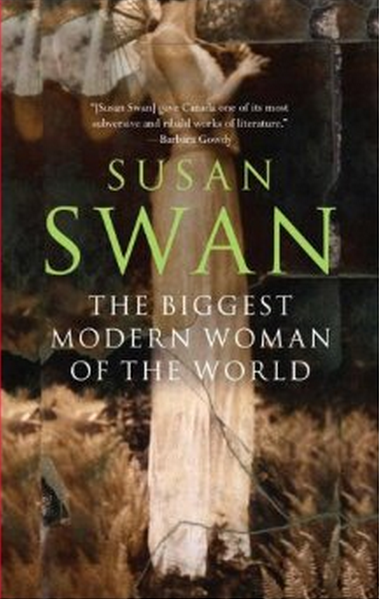
Susan Swan’s 1983 novel The Biggest Modern Woman of the World

The Biggest Modern Woman of the World

Susan Swan’s 1983 novel The Biggest Modern Woman of the World is a fictional autobiography of nineteenth century Maritime giantess, Anna Swan. The novel is divided into four chronological sections, each of which questions, either implicitly or explicitly, gender and national relations during the Victorian era. Like its narrator, the novel is obsessed with bodies—and with ingestions and expulsions. Whether a doctor is trying to take Anna’s measurements or midgets are drinking growth potions, nearly every page features an anatomical concern. In one memorable scene, P.T. Barnum’s curiosities gather for an eating contest at Delmonico’s, “a popular French restaurant at the corner of Fifth Avenue and Fourteenth Street” in New York City (76). After having “inhaled [nineteen] puddings like air,” Anna loses the contest to a “normal” because her corset is too tight (77). This scene exemplifies the specificity of her embodied experiences as both an individual of incomparable size and as a woman who remains subject to Victorian mores and conventions. Here, the quantity that Anna eats—too much for a woman but too little for a giant—directly relates to her competing vectors of identity.

Swan, Susan. The Biggest Modern Woman of the World: A Novel. Toronto, Canada: Lester & Orpen Dennys, 1983. Print.

Written by: Valerie Silva

Valerie Silva is currently in her final year of the Master’s program at McGill University, where she studies contemporary Canadian literature. Her current research focuses on affect, objects, and the body in contemporary Canadian life writing.