Everybody’s Hungry: Food and Control in “Play the Monster Blind”

We are launching a second miniseries. Over the next few weeks we will be joined by students from Nathalie Cooke’s Canadian Literary Fare course (ENG 441, department of English, McGill) as they too are studying food scenes in Canadian literature this term.


Text by Carla Dean.

Food and familial power dynamics form the center of “Play the Monster Blind” by Lynn Coady; throughout the story, the struggles of various characters for power in their relationships are reflected by their eating and drinking habits. Characters who successfully control their food intake have power in the family unit; those who are controlled by food are disempowered.

John is a more powerful version of his father; he has overcome an eating disorder (4), whereas his father is incapable of controlling his drinking habits. An example of this dynamic is the restaurant incident, where the father causes a scene over “a good dry chip” (15). John, however, uses “‘[a] little thing out there called PR,’” (13) which really means a controlled approach, to much better effect. John’s interpersonal skills earn him far more social currency than his father’s drunken antics.

Bethany similarly mirrors Ann, whose lack of agency is clearly linked to her eating habits. Bethany is a self-described “big eater most of the time” (11) and earns the father’s approval because of her appetite (10), whereas Ann is a “meal-obsessed” recovering anorexic (11). Ann associates her stagnant, disappointing life circumstances with food; she throws up shellfish after a nightmare in which she “‘[is] just doing all the things [she’s] been doing all along’” (15). Ann’s blow to Bethany at the end of the novel, which turns her new ally against her, only happens because of excessive drinking—and Bethany, who does not lose control, tastes power (25).


Works Cited

Coady, Lynn. “Play the Monster Blind.” Play the Monster Blind: Stories. Toronto: Doubleday, 2000. 1-25. Print.

Kulesza, Michal. Movie Night. Digital image. Stock.tookapic.com. JPEG file. February 7th, 2016. <https://stock.tookapic.com/photos/21005&gt;.

Food in Canadian Film, Part 5: Les ordres

by Jonathan Motha-Pollock

The October Crisis followed the kidnapping of two government officials in Montreal by the Front de libération du Québec (FLQ). Prime Minister Pierre Trudeau instituted the War Measures Act, bringing the Canadian military into the city and allowing the Montreal Police Department to detain 497 people without due process (Clément 167). The arrests largely targeted nationalists and those of the political left — those whose beliefs might align with the FLQ. Les ordres is Michel Brault’s fact-based retelling of this event. It is a docu-fiction that tells the story of five individuals among the many civilians who were wrongfully imprisoned during the October Crisis. The film chronicles the experiences of these five characters from the time they are arrested, to the injustices they suffer in prison, to the lasting effects after their release.

The following two scenes yoke food together with freedom. The one (food) stands in for the other (freedom or lack thereof).

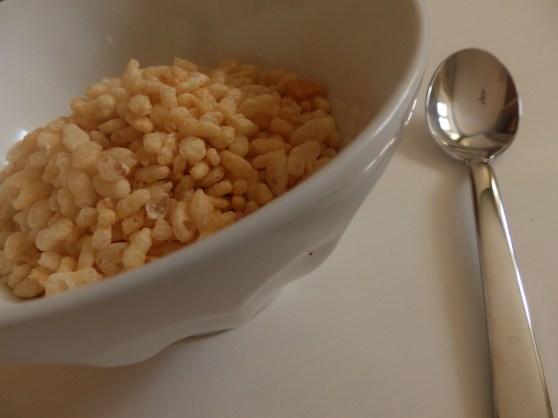
In the first, a handcuffed Richard instructs his eldest son Sébastien to feed his infant brother cereal. Sébastien responds to his father’s orders, saying that his little brother will not want to eat cereal. His infant brother’s appetite is a matter of choice, desire, freedom, none of which applies to Richard, who is being taken to prison. Beyond this, however, Richard is also positioned as a prisoner in the way that he is constrained by the limits of the lens. The camera frames Richard with a medium shot — cutting off his legs as well as the top of his head — while he is being handcuffed. Additionally, the blocking of characters in the scene lends itself to a sense of enclosure: Richard is positioned between the two officers who arrest him; there is literally no way out. It is telling, then, that the cereal eater or abstainer in question is not once “captured” on film during the conversation about cereal. He is sitting in a nearby room, but he maintains his freedom, outside the frame.

OLYMPUS DIGITAL CAMERA

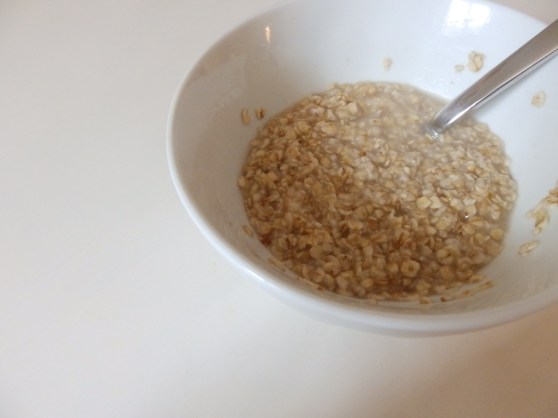
The second scene depicts Clermont’s struggle to stay nourished while locked up in his prison cell. The tight shots of Clermont’s cell portray an image of a man with no room to move. Additionally, his cell bars stand in front of the camera, dividing him from the viewer. Clermont is given food that is inedible. Initially he tries to eat the porridge but vomits. He struggles to exercise agency by refusing to eat until actual food is provided. André Loiselle describes the prisoners’ refusal to eat as a matter of “try[ing] to maintain a sense of dignity in the face of horrendous humiliation” (108). Later, another inmate explains that the prison guards delay access to edible food so that when it is given, the guards appear as benefactors to the prisoners.

 
OLYMPUS DIGITAL CAMERA

Reading food as a symbol of freedom in this film exposes how the actions of law enforcement can violate people’s civil liberties, and it reminds the viewer to be skeptical of extreme government action.


Works Cited

Clément, Dominique. “The October Crisis of 1970: Human rights abuses under the war measures act.” Journal of Canadian Studies/Revue d’études canadiennes 42.2 (2008): 160-186.

Loiselle, André. Cinema as History: Michel Brault and Modern Quebec. Toronto International Film Festival, 2007.

Les ordres. Montreal: Michel Brault, 1974. DVD.


Photos by Alexia Moyer


Food in Canadian Film, Part 4: Take This Waltz

by Ilinca Enache

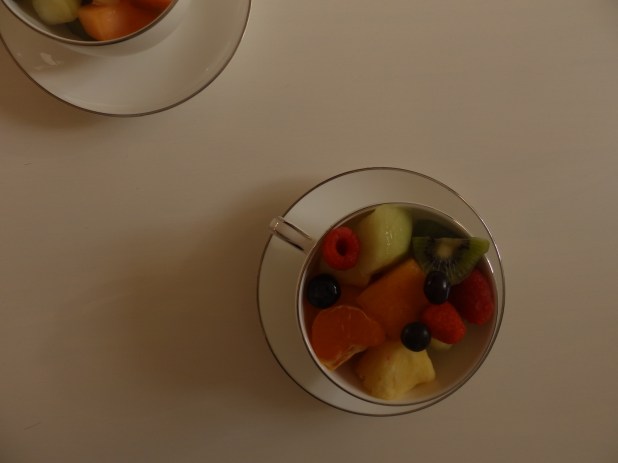
In Sarah Polley’s film Take This Waltz, 28 year-old Margot struggles to make sense of her feelings for her husband Lou in light of her recent flirtatious relationship with her neighbor, Daniel. Food plays a crucial role in this film: the type of dish Margot eats with each of the two men reflects the point they have reached in their respective relationships. A dull dessert, in other words, signals that the end is nigh. Margot always ends up in the same place: eating fruit salad, making blueberry muffins and living in what she sees as a dreary relationship.

Continue reading

Food in Canadian Film, Part 3: Les bons débarras

by Natasha Shalliker

Throughout Les bons débarras there are many scenes in which characters interact over food and drink. However, protagonist Manon – the troubled and trouble-making daughter of single mother, Michelle – does not eat at all throughout the course of the film, and her lack of appetite becomes a subject of narrative concern. For Manon, food is a vehicle of control and a way for her to exercise power as she works to make her dream — to have her mother’s love all to herself — a reality.

One of the most pivotal scenes of the entire film centres on Manon’s refusal to consume a hot dog during her birthday party. During this scene, Manon refuses the hot dog in the same moment that her rude, cruel, manipulative comments and rule-breaking behaviour come to the fore; she tells her mother that Michelle’s boyfriend has molested her. Although we have no way of knowing whether or not this is true, Manon’s manipulative behaviour throughout the film causes us to doubt the veracity of her statement. As a result, Michelle ends her relationship with Maurice, which means that Manon can monopolize her mother’s attention once more.

OLYMPUS DIGITAL CAMERA Continue reading